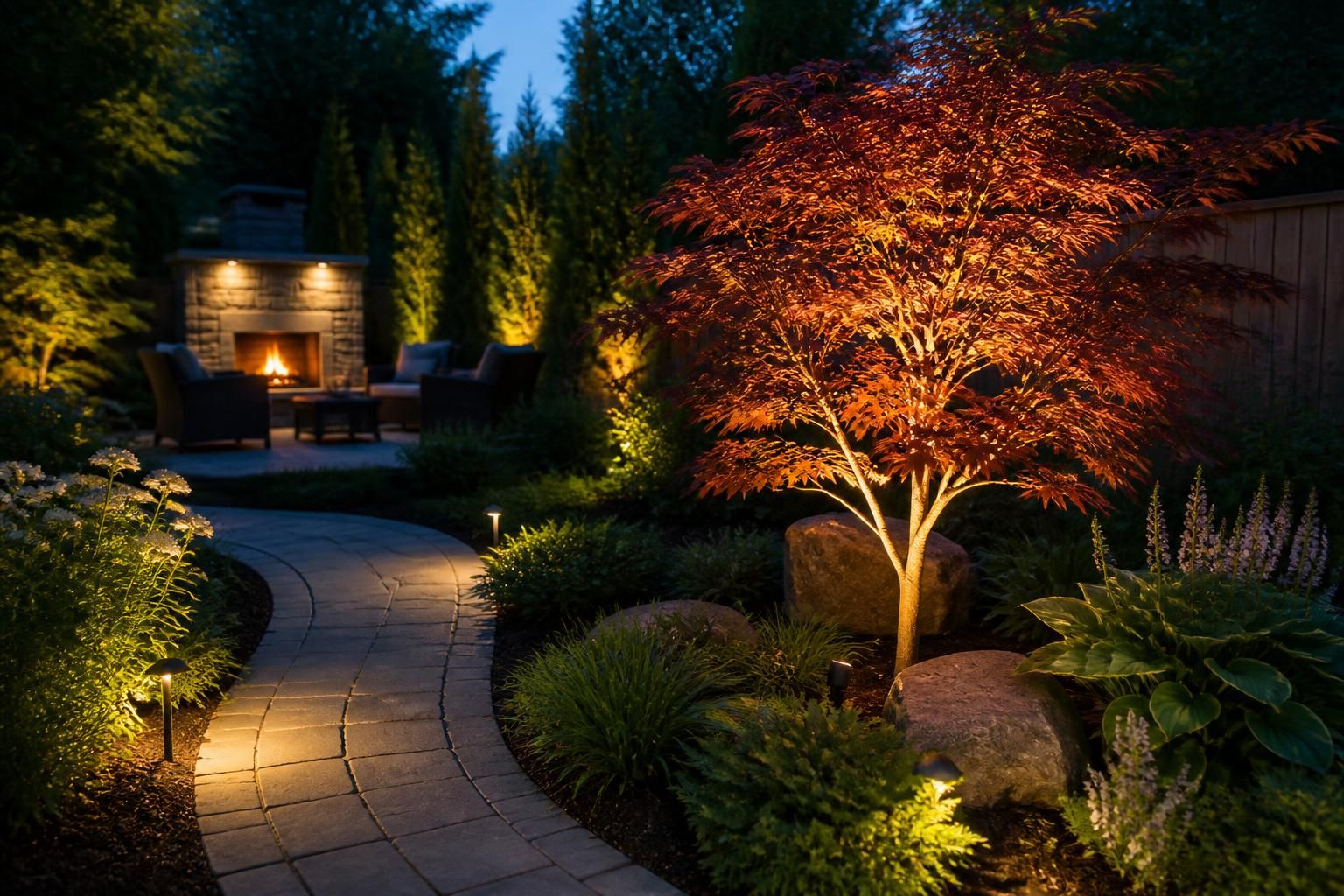
Dark corners, harsh glare, and a yard that disappears after sunset can make an outdoor space feel smaller than it should. If paths are hard to follow, planting beds disappear at night, or gathering areas feel unfinished once the sun drops, the right garden lighting can change the whole experience.
Pacific Crest Outdoor Living designs garden lighting for Bend, OR homes that need more than a few fixtures on a timer. We shape light around planting, stone, circulation, and evening use so your landscape feels welcoming, grounded, and easy to enjoy after dark.
Garden lighting should do more than brighten a yard. It should guide movement, support the layout, and make planted areas look intentional after sunset. In Bend, OR, that means thinking about how light works with patios, walkways, trees, garden beds, and fire-side seating without overwhelming the space.
Pacific Crest Outdoor Living builds lighting plans around how you use the yard, where you want visual emphasis, and which areas need soft visibility. We focus on warm, layered lighting that feels natural with the landscape rather than harsh or overdone.
Many homeowners start thinking about lighting after they notice the same problems night after night. If your outdoor space only works during daylight, the landscape may be missing the layers that make it usable after sunset.
A high desert landscape needs lighting that supports the way you live across the seasons. The goal is not to create a dramatic effect for one night, but to make the garden useful, comfortable, and easy to enjoy throughout the year.
We plan for softer evening use, cooler months, and the changing look of planting through the seasons. That can mean adjusting fixture placement, using light to define structure, and choosing where to emphasize circulation versus atmosphere.
Good garden lighting starts with the landscape itself. Before a single fixture is placed, we look at the structure of the yard, where people naturally move, and how the plantings and hardscape should read after dark.
Pacific Crest Outdoor Living approaches lighting as part of the larger outdoor design, not as an add-on. That means the fixtures, beam direction, and spacing all support the rest of the space.
Garden lighting should not wash the yard in brightness or create a flat, commercial look. We avoid fixtures that feel visually heavy, light that points where it is not needed, and layouts that overpower planting or hardscape details.
Instead, we use a layered approach that keeps the scene calm and readable. The result feels natural during the day and inviting after sunset.
Placement makes the difference between lighting that looks thoughtful and lighting that feels scattered. A few well-placed fixtures can do more for a garden than a larger number arranged without a plan.
For Bend, OR landscapes, placement often needs to support both function and atmosphere. Paths need clarity. Beds need shape. Seating areas need soft visibility. The goal is to guide the eye without flattening the garden.
Garden lighting works especially well when it is planned alongside planting. Trees, shrubs, grasses, and layered beds all change the way light reads at night. Instead of thinking of lighting as separate from the garden, we shape both together.
Pacific Crest Outdoor Living often pairs garden lighting with drought-tolerant planting so the space feels cohesive and suited to Central Oregon homes. Light can create texture through foliage, deepen the look of shadows, and help even simpler planting schemes feel rich after dark.
Dense shrubs can soften a fixture and create a gentler glow. Open branching can cast interesting shadows across walls or paving. Taller plantings can frame a path or draw the eye toward a seating area. When lighting and planting are considered together, the yard feels more complete at night.
Homeowners usually want a clear process, not a pile of technical language. We keep the work straightforward, with a focus on how the finished lighting will feel and how it will support daily use.
With Pacific Crest Outdoor Living, the goal is a lighting plan that feels considered from the first evening it is used, not something that needs constant second-guessing.
Some homeowners want a subtle wash of light that quietly guides the eye. Others want stronger accents around planting, stone, or gathering areas. Garden lighting can do both, but the balance matters.
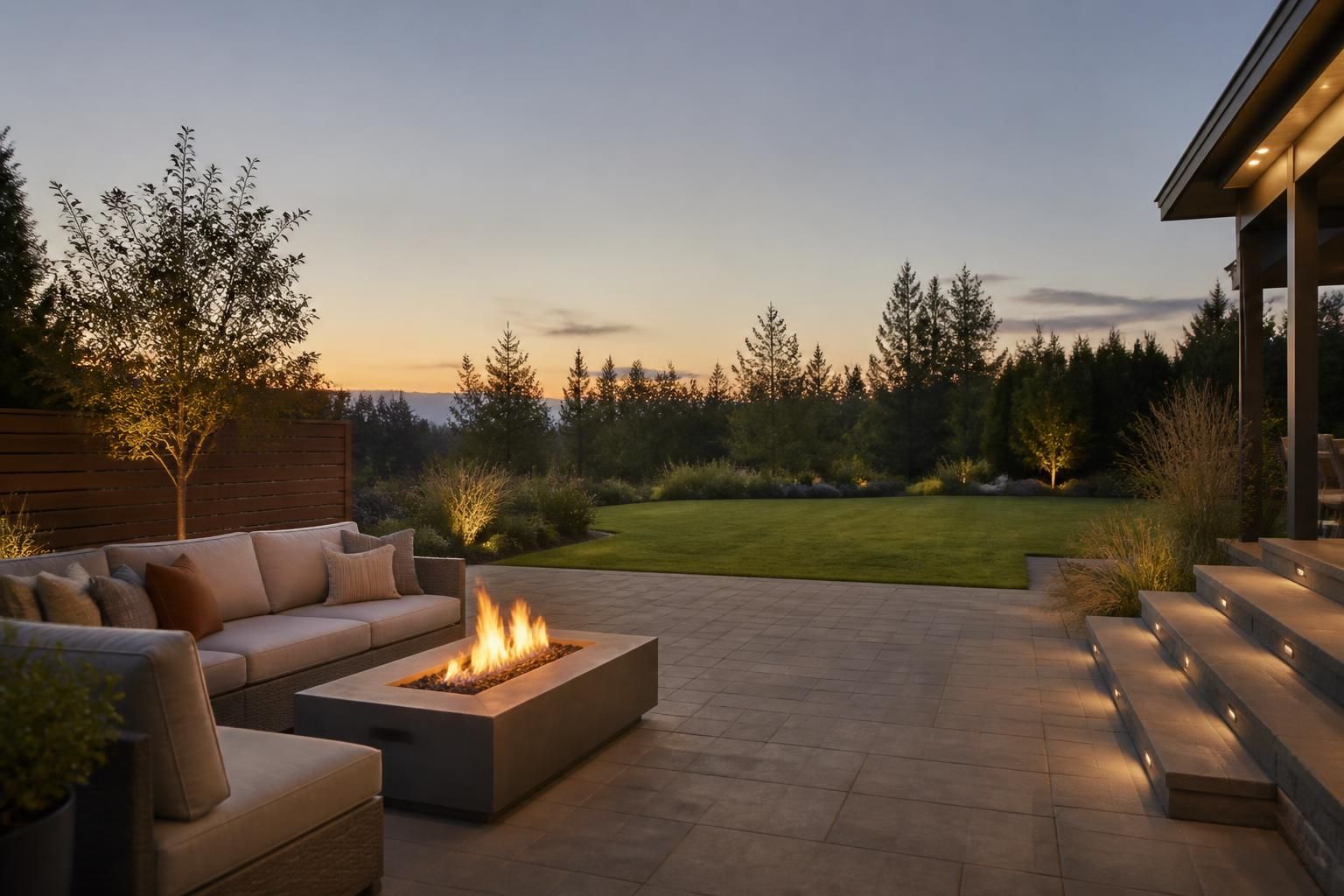
We help Bend, OR homeowners choose where the garden should feel bright enough for comfort and where it should stay softer for mood. That balance can make an outdoor room feel calm instead of busy, especially when the yard already includes patios, fire features, or detailed planting.
It gives shape to the landscape after dark. Paths become easier to follow, planting gains depth, and gathering areas feel more complete.
Yes. Lighting and drought-tolerant planting often work very well together because the contrast of texture, shadow, and form stands out at night.
No. Garden lighting can be added as part of a larger design or as a focused update to improve specific areas of the yard.
Walkways, steps, patio edges, planting beds, fire feature zones, and focal trees or structures are common places where lighting adds value.
By using careful placement, controlled direction, and a layered layout that supports the space without washing it out.
Because we design outdoor spaces as a whole. That lets us place lighting where it supports the patio, planting, and gathering areas you already want to enjoy.
If your Bend, OR garden fades away once the sun goes down, garden lighting can bring back the structure and atmosphere you want. Pacific Crest Outdoor Living designs refined outdoor spaces that feel natural, usable, and inviting after dark.
Reach out to discuss your yard, your goals, and the places where lighting would make the biggest difference. We are located at 615 NW Arizona Ave, Bend, OR 97703. Call +15415550198 or email hello@pacificcrestoutdoorliving.com. Hours are Monday through Friday, 8:00 AM to 5:00 PM, with Saturday by appointment.
Let’s Talk
Share your goals for the space, and we will help you shape an outdoor area that works for everyday living, entertaining, and the Central Oregon climate.